
European Commissioner Ekaterina Zaharieva visits ÄIO and TalTech
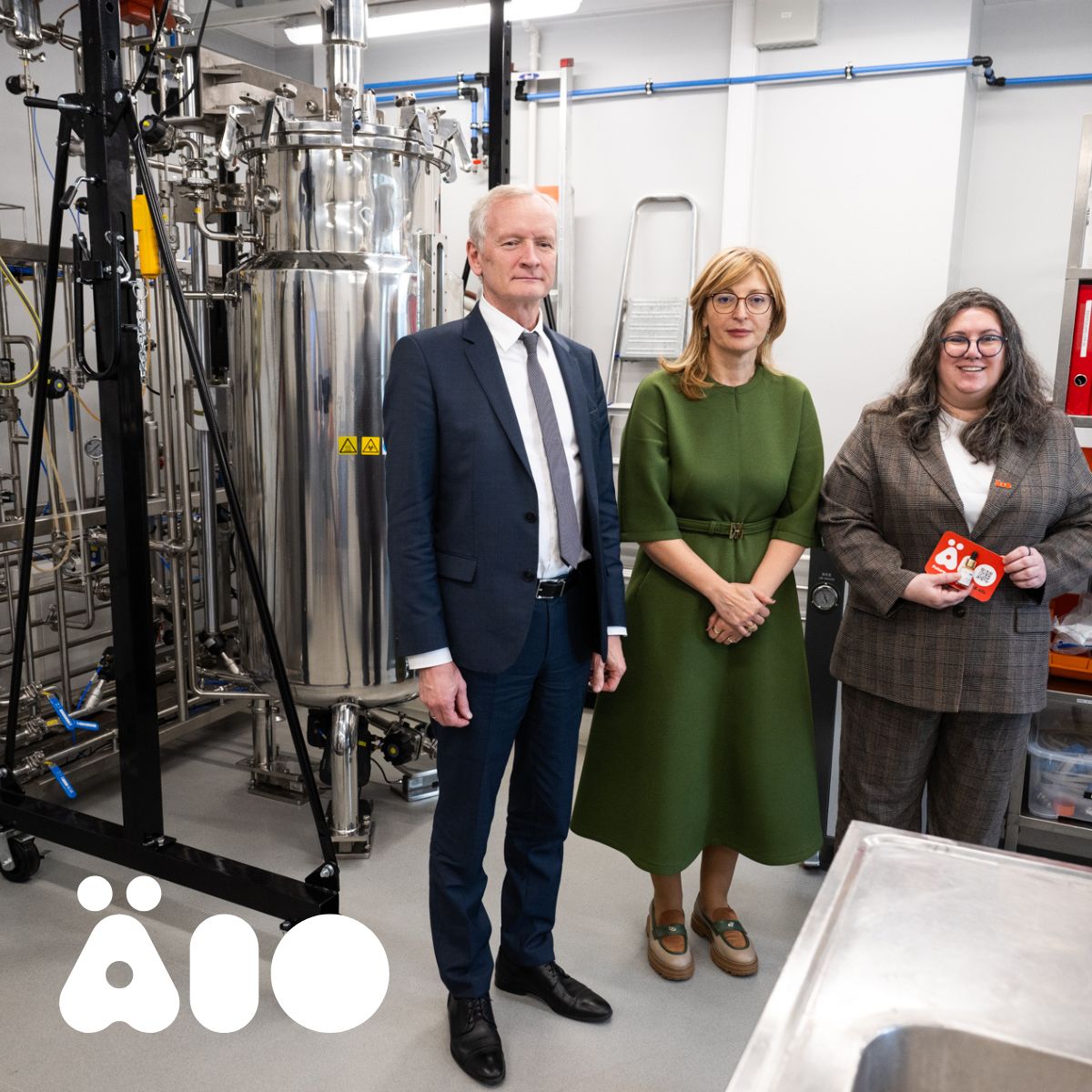
How can Europe ensure that the technologies developed in its universities and laboratories also become successful businesses and industries in Europe? This was one of the central questions discussed during the visit of European Commissioner for Startups, Research and Innovation, Ekaterina Zaharieva, to Tallinn University of Technology (TalTech) and ÄIO on 5 November 2026.
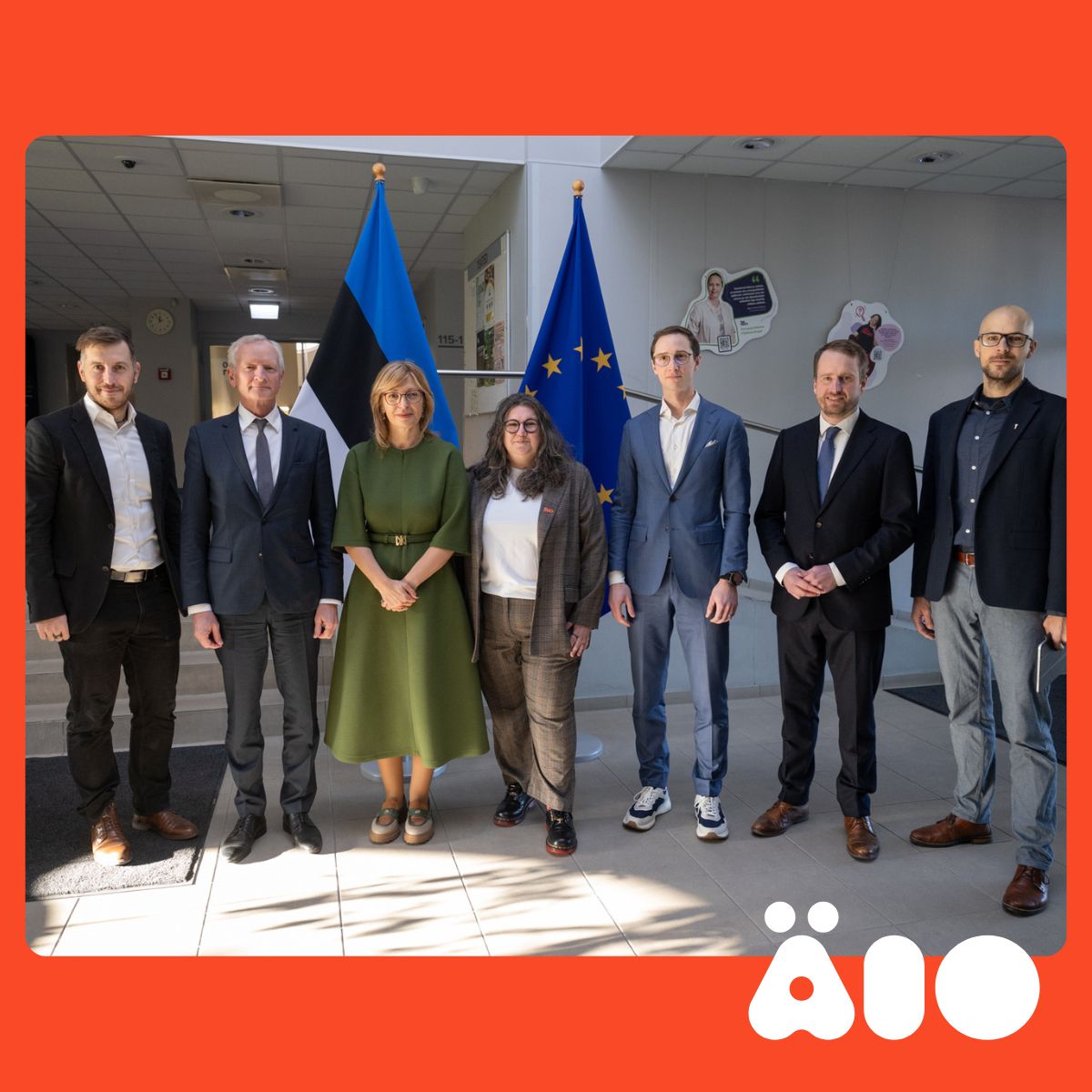
The visit brought together Commissioner Zaharieva, TalTech Rector Tiit Land, representatives of the university’s Technology Knowledge Centre and five innovative TalTech startups for a roundtable discussion about the future of European innovation.
The conversation focused on the opportunities and challenges facing European deep-tech companies, access to scale-up financing, industrial biotechnology development, regulatory frameworks and the journey from scientific discovery to commercial success. ÄIO had an opportunity to share our first-hand experience as a research-driven biotechnology company working towards industrial-scale production and to contribute to a broader discussion about Europe’s competitiveness.
Building a stronger European innovation ecosystem
The European Commission plays a central role in shaping the policies, legislation and funding programmes that support research, innovation, entrepreneurship and industrial development across the European Union. As European Commissioner for Startups, Research and Innovation for the 2024–2029 mandate, Ekaterina Zaharieva is responsible for strengthening Europe’s research and innovation ecosystem, improving access to investment and creating better conditions for innovative companies to grow.
Her responsibilities include strengthening the European Innovation Council (EIC) and the European Research Council (ERC), overseeing research and innovation funding through programmes such as Horizon Europe, supporting European startups and scaleups, and developing initiatives to reduce regulatory and investment barriers.
In May 2025, the European Commission launched its EU Startup and Scaleup Strategy, recognising that too many European companies face difficulties when moving from research to market and expanding their businesses within Europe. The strategy addresses five key areas: regulatory simplification, access to financing, market uptake, talent and access to infrastructure. The European Innovation Act, proposed by the Commission in September 2026, represents another important step towards improving the conditions for European companies to develop, finance and scale their innovations.
Together with European biotechnology policy initiatives, these efforts have the potential to influence the future of companies like ÄIO. However, understanding how these policies translate into the everyday reality of technology-driven businesses requires direct dialogue between policymakers, researchers and entrepreneurs.
ÄIO: turning European scientific excellence into commercial innovation
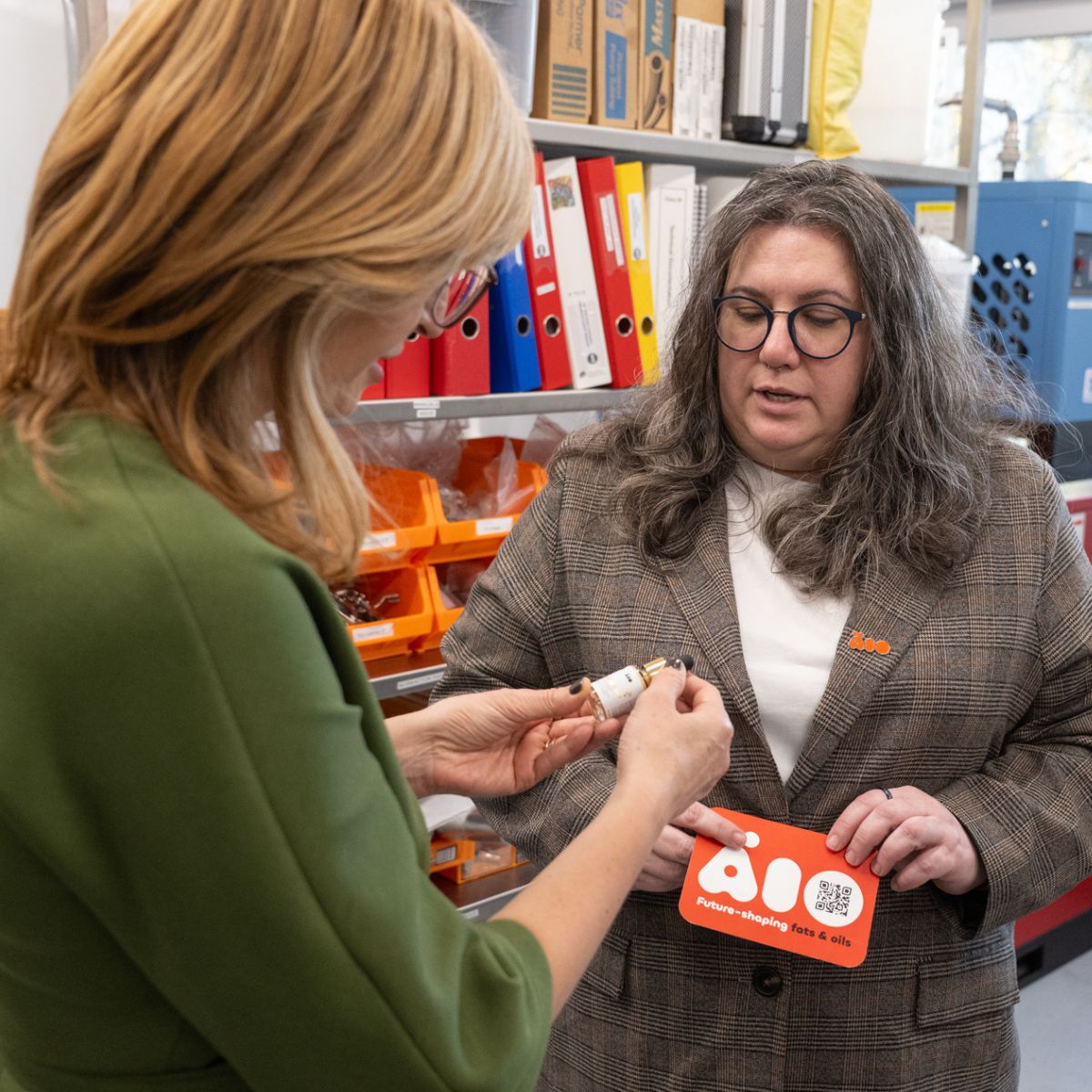
ÄIO’s journey began with scientific research at TalTech, where our co-founders explored how microorganisms could offer a fundamentally different way of producing fats and oils. Today, ÄIO is developing and commercialising fermentation-derived ingredients that offer alternatives to conventionally produced palm oil, coconut oil, animal fats and other traditional lipid sources.
Fats and oils are essential ingredients across numerous industries, from food and cosmetics to household products and industrial applications. However, their conventional production is associated with increasing pressure on agricultural land, natural resources, biodiversity and global supply chains. We use fermentation to convert renewable industrial side streams from the food, agricultural and wood industries into high-value functional fats and oils. Instead of relying exclusively on agricultural crops, our technology creates value from resources that already exist. This approach offers an opportunity to reduce dependence on imported raw materials, diversify European ingredient supply chains and establish more circular production models.
Since our founding in 2022, we have moved from university research to pilot-scale development, demonstrated production scale-up, launched three commercially available cosmetic ingredients and established an international distribution network. The next challenge is making industrial-scale production commercially competitive and this is where the European innovation ecosystem has an important role to play.
From laboratory to market: where European innovation faces challenges
Europe has world-class universities, highly skilled scientists, ambitious entrepreneurs and established research funding programmes. These provide an excellent foundation for developing groundbreaking technologies. However, for industrial biotechnology companies, the journey from a successful laboratory experiment to a commercially viable product is particularly complex. It requires regulatory authorisation, extensive product validation, customer qualification, manufacturing infrastructure and significant capital.
During the roundtable, ÄIO highlighted three interconnected challenges that can influence where European biotechnology companies ultimately commercialise and manufacture their products.
Making Novel Food authorisation more predictable
The EU Novel Food framework plays an important role in ensuring consumer safety. However, lengthy and sometimes difficult-to-predict authorisation processes can create significant financial and commercial challenges for emerging biotechnology companies. At ÄIO, this has influenced our commercialisation strategy. While our technology was developed with opportunities across multiple industries, we prioritised entering the cosmetics market while continuing our work towards Novel Food authorisation for food applications.
For a startup, regulatory uncertainty creates a particularly challenging situation: potential food industry customers often require regulatory authorisation before making commercial commitments, while investors expect evidence of customer traction and future revenue before committing further capital. Meanwhile, fermentation-derived food companies have in some cases gained market access in Singapore and the United States before receiving authorisation in the European Union.
The question is not whether Europe should maintain its high food-safety standards. It absolutely should. The question is how Europe can make its authorisation processes more predictable, transparent and accessible while maintaining the same level of scientific rigour and consumer protection. Earlier scientific dialogue, clearer documentation requirements, transparent assessment timelines and sufficient resources for the European Food Safety Authority (EFSA) could make a meaningful difference for innovative food ingredient companies.
Bridging the commercialisation and financing gap
Moving from laboratory research to industrial production requires time, physical infrastructure, specialised equipment, regulatory work and significant investment before substantial commercial revenues can be generated. Europe has established strong funding mechanisms for scientific research, technology development and pilot-scale demonstration. However, a particularly challenging financing gap can emerge when companies need to move beyond research and begin supplying their first commercial customers.
This is sometimes referred to as the missing middle of innovation financing: companies are too commercially advanced for many research grants, yet not sufficiently mature in revenue or production capacity to access conventional growth capital or industrial financing. For companies like ÄIO, this is precisely the stage where additional financing can have a transformative impact.
Cross-border innovation loans, public guarantees and blended financing instruments combining public and private capital could help European biotechnology companies complete regulatory processes, validate industrial production, qualify products with customers and establish commercially viable manufacturing. Supporting the transition from demonstrated technology to first commercial production is essential if Europe wants to capture the economic value of the innovations it has helped develop.
Making industrial biotechnology manufacturing competitive in Europe
For an emerging biotechnology company, building a dedicated industrial facility too early can involve considerable financial risk. Contract manufacturing offers an alternative pathway, allowing companies to access existing infrastructure, validate industrial processes and gradually increase production volumes. However, access to competitively priced biomanufacturing capacity remains a challenge.
In ÄIO’s experience, European contract manufacturing costs can, depending on production volumes and downstream processing requirements, be up to five times higher than comparable options outside Europe. This creates a contradiction: European research and innovation funding helps develop technologies locally, but manufacturing economics may encourage companies to commercialise and produce elsewhere. If Europe wants to strengthen its industrial biotechnology sector, retain intellectual property, create highly skilled jobs and reduce strategic dependencies, support must extend beyond research laboratories and pilot plants. It must also help companies establish their first commercially viable manufacturing operations.
What could Europe do differently?
During the discussion with Commissioner Zaharieva, ÄIO highlighted three areas where European policy could make a practical difference:
- Make Novel Food authorisation more predictable. Enable early scientific consultation, establish clearer end-to-end timelines, increase transparency around assessment suspensions and ensure sufficient regulatory capacity for innovative fermentation-derived food ingredients.
- Bridge the commercialisation financing gap. Develop accessible cross-border financing instruments, innovation loans, guarantees and milestone-based blended finance supporting regulatory authorisation, initial industrial production and customer qualification.
- Recognise measurable sustainability benefits. Create credible mechanisms that reward technologies demonstrating reduced land use, lower deforestation risk, resource efficiency and reduced dependence on imported raw materials through industrial incentives, public procurement and other market mechanisms.
These are not challenges unique to ÄIO. They reflect broader questions facing European industrial biotechnology and other research-intensive industries. An important question is how initiatives such as the European Innovation Act, the European Biotech Act and European scale-up financing instruments will translate into practical opportunities for companies over the next two to three years.
How can Europe ensure that the companies it helps create also have the opportunity to grow and manufacture here?
Dr. Nemailla Bonturi, Co-founder and CEO of ÄIO, reflected on the importance of the discussion:
“As a scientist who became a founder, I see very clearly that developing the technology is only half the journey. The difficult part is turning good science into a competitive business. This meeting gave us the opportunity to speak directly about the practical barriers deep-tech companies face when moving from research to market: regulation, access to scale-up capital and the cost of manufacturing. If Europe wants to keep the companies and technologies it helps create, founders and policymakers need this kind of direct conversation.”
Keeping European innovation in Europe
Europe does not lack scientific excellence, innovative ideas or ambitious founders. The challenge is ensuring that these strengths translate into globally competitive businesses, industrial capacity and long-term economic value. Our ambition is to build a globally competitive biotechnology company rooted in Europe. We believe that European industrial biotechnology can contribute to more resilient supply chains, sustainable manufacturing, resource efficiency and economic competitiveness. Achieving this requires collaboration between universities, startups, established industries, investors, regulatory authorities and policymakers.
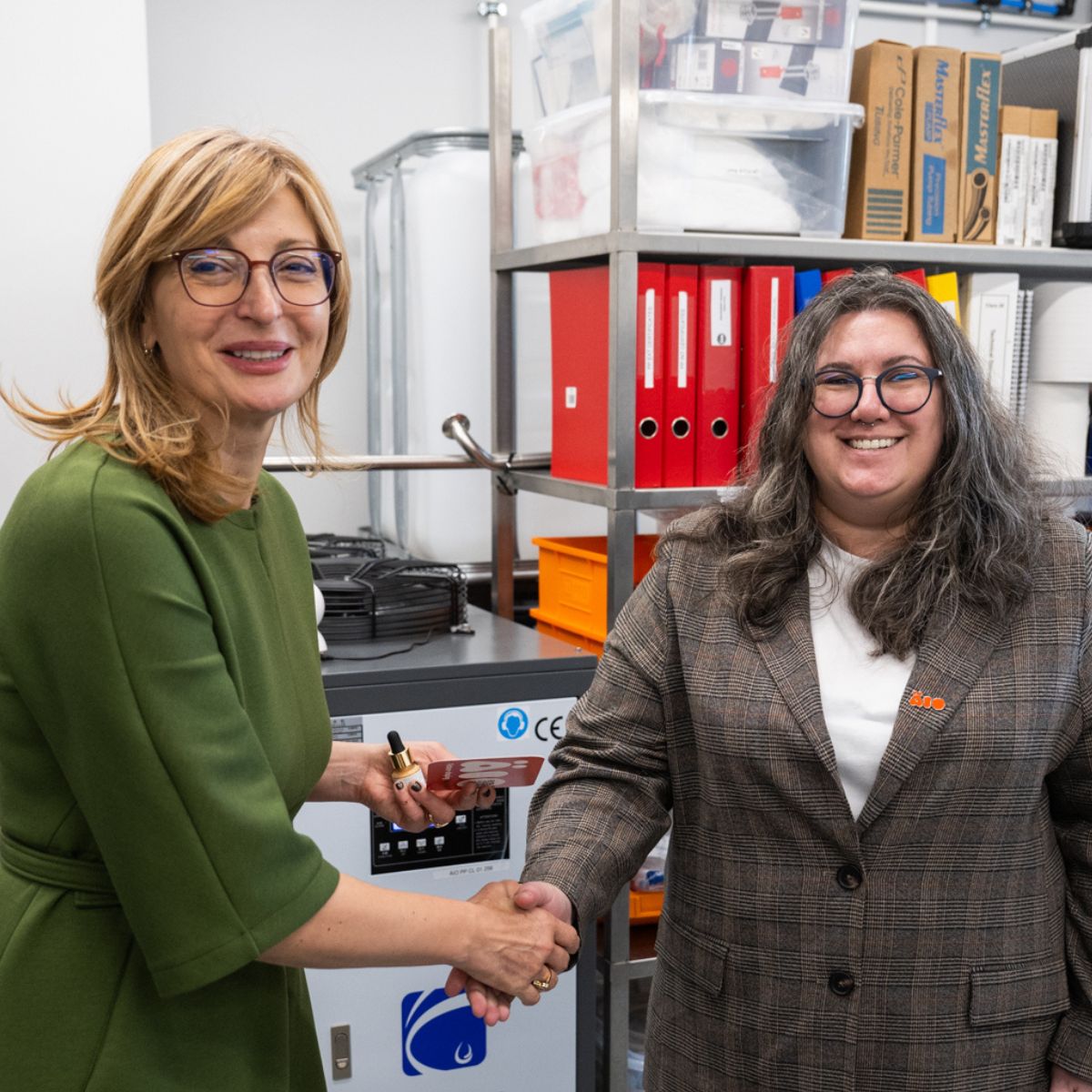
We sincerely appreciate Commissioner Ekaterina Zaharieva’s interest in Estonia’s innovation ecosystem, her visit to ÄIO and TalTech, and her willingness to listen directly to the experiences of European deep-tech entrepreneurs.